India Approves Its First Dengue Vaccine: CDSCO Clears Qdenga for Ages 4 to 60
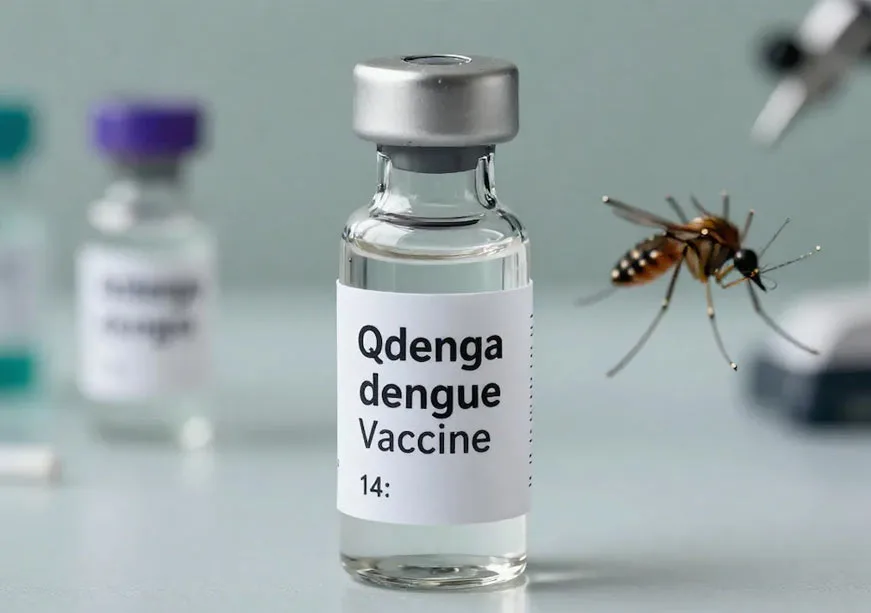
In a landmark step for the country's fight against dengue, the Central Drugs Standard Control Organisation (CDSCO) has approved India's first dengue vaccine — Qdenga, developed by Japanese drugmaker Takeda — for people aged 4 to 60 years, after reviewing its quality, safety and efficacy.
Qdenga is a live, attenuated tetravalent vaccine that protects against all four dengue virus serotypes. It is given as two injections three months apart. The approval comes in a year when India has recorded one of its worst dengue outbreaks, with more than 50,000 cases reported by early August and infections increasingly occurring outside the traditional monsoon window.
To expand supply for the Indian market, Takeda has a manufacturing collaboration with Hyderabad-based vaccine maker Biological E, which is expected to scale up local production. Separately, the Serum Institute of India is running late-stage trials of a monoclonal antibody treatment for dengue with international partners — a sign of how much of the global effort against the disease now runs through India.
Public-health experts have welcomed the approval but caution that a vaccine is not a silver bullet. Vector control — clearing stagnant water, fogging and community surveillance — remains essential, and the vaccine's rollout strategy, pricing and availability in government programmes are still to be announced.