
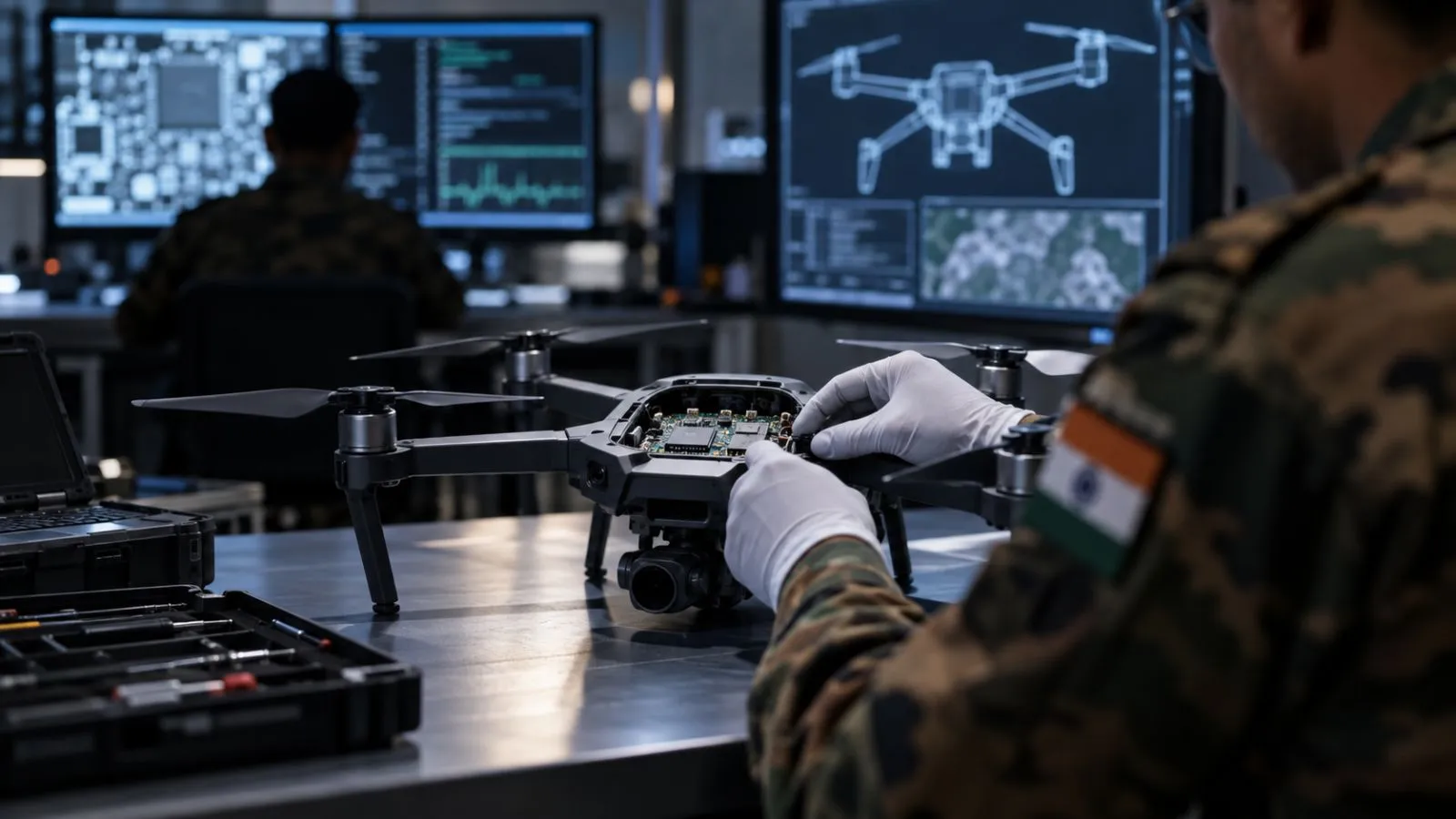
Indian Army Deploys AASHVAST Labs to Screen Drones for Foreign Software Bugs and Threats
The Indian Army is deploying six high-tech Assessment and Analysis of Electronic Systems Hardware for Vulnerabilities and Security Threats (AASHVAST) laboratories across the country to strengthen cybersecurity safeguards for its defense platforms. Following the operation of the first lab in New Delhi, five additional testing facilities are being established to conduct mandatory software and hardware inspections of military drones and surveillance systems.
Developed for the Directorate General of Electronics and Mechanical Engineering, the AASHVAST suite performs rigorous firmware analysis and validation. It scans electronic systems for up to 14 categories of potential threats, including embedded backdoors, unauthorized remote access tools, hidden code commands, and geospatial navigation vulnerabilities such as susceptibility to GPS spoofing or jamming. The initiative stems from growing defense concerns over undisclosed foreign components, particularly Chinese-origin parts, entering military supply chains.
Military officials emphasized that physical inspections alone cannot detect software-level manipulation that could disable unmanned aerial vehicles during operational missions. By establishing dedicated AASHVAST labs, the armed forces aim to verify manufacturer-approved updates and ensure complete cyber resilience. The screening process, currently focused on military drones, will subsequently expand to cover surveillance CCTV cameras and other sensitive electronic defense equipment nationwide.