
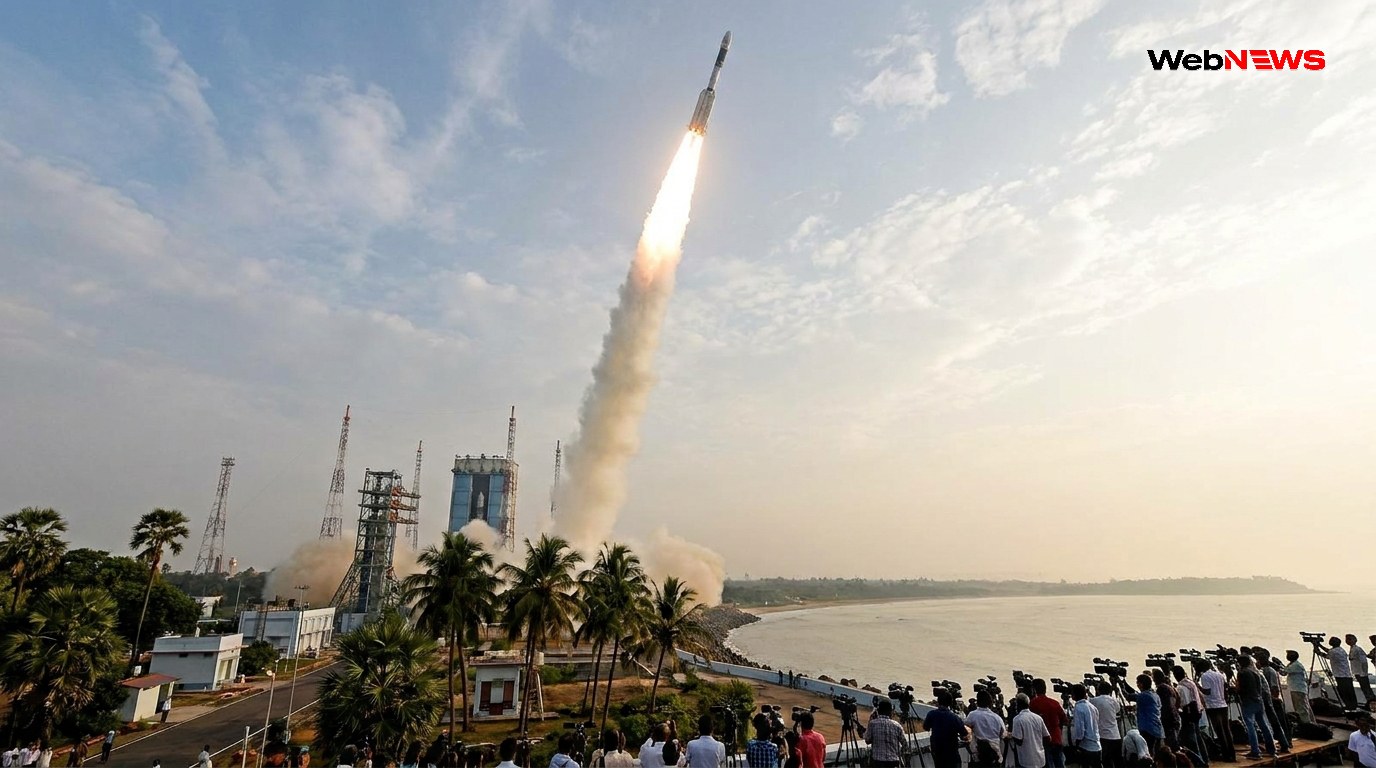
ISRO Achieves Milestone with Successful Launch of Geo-Imaging Satellite EOS-05 Aboard GSLV-F17
In a major milestone for India's space program, the Indian Space Research Organisation (ISRO) successfully launched the Geosynchronous Satellite Launch Vehicle (GSLV-F17) carrying the advanced Earth observation satellite EOS-05 from the Satish Dhawan Space Centre in Sriharikota at 2:55 AM on September 4, 2026. Approximately 18 minutes after liftoff, the 2,367 kg satellite was precisely injected into its intended sub-geosynchronous transfer orbit, marking the heaviest payload ever lifted into transfer orbit by a GSLV rocket.
EOS-05, also known as GISAT-1A, represents India's first dedicated imaging satellite to operate from geosynchronous orbit, nearly 36,000 km above the Earth. Operating from this vantage point, the satellite matches the rotation speed of the Earth, enabling constant, real-time surveillance over the Indian subcontinent and surrounding maritime regions. This capability provides crucial 24x7 monitoring for disaster management, agriculture, environmental tracking, weather forecasting, and national security oversight.
The successful mission holds significant technical and strategic importance, as it ends a seven-month launch hiatus for ISRO following a failed PSLV mission in January 2026. Prime Minister Narendra Modi praised the accomplishment as an "outstanding achievement" and a proud moment for the nation, emphasizing that the growing collaboration between ISRO and Indian industry is expanding capabilities across the space ecosystem. ISRO Chairman Dr. V. Narayanan confirmed that all onboard systems and solar panels deployed successfully, setting the stage for orbit-raising maneuvers in the coming days.