
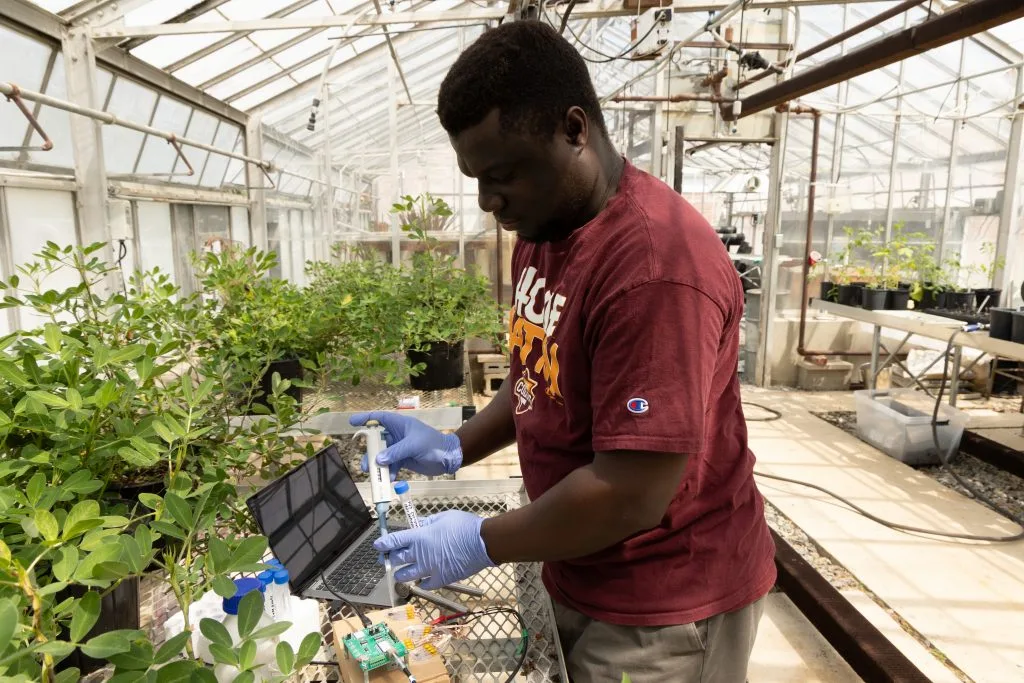
Virginia Tech Researchers Develop Electrochemical Biosensors for Early Crop Disease Detection
Engineers and agricultural scientists at Virginia Tech have developed electrochemical biosensors engineered for early detection of destructive fungal diseases in crops. The technology specifically targets Sclerotinia blight, a soil-borne fungal pathogen capable of causing severe yield losses in peanut crops. Built using 3D-printed resin substrates paired with micro-scale platinum electrodes, the biosensor measures elevated concentrations of oxalic acid in plant sap—an early biochemical biomarker produced abundantly when plants become infected.
By identifying fungal presence at the molecular level before outward visual symptoms occur, the diagnostic platform enables growers to apply localized treatments rather than spraying broad-spectrum fungicides after widespread field damage has already taken root. Beyond peanut crops, the research team is also field-testing stem-wearable sensors on corn plants to stream real-time physiological health metrics directly to smartphone applications.
Field trials with commercial farming operators are planned to evaluate sensor durability, spatial distribution density, and cost scalability across large crop acreages. Rapid molecular diagnostic platforms are accelerating the shift toward ultra-precise crop protection, enabling targeted interventions that conserve chemical inputs, protect soil ecosystems, and preserve harvest yields.