Ghost stars reveal how the Milky Way grew by swallowing smaller galaxies over 12 billion years
Data from the European Space Agency's Gaia mission is helping astronomers trace the Milky Way's violent past. A 2026 study found 12 of 39 globular clusters examined were not born in our galaxy, and an August paper confirmed a collision with a galaxy called Kraken-Heracles about 12 billion years ago.
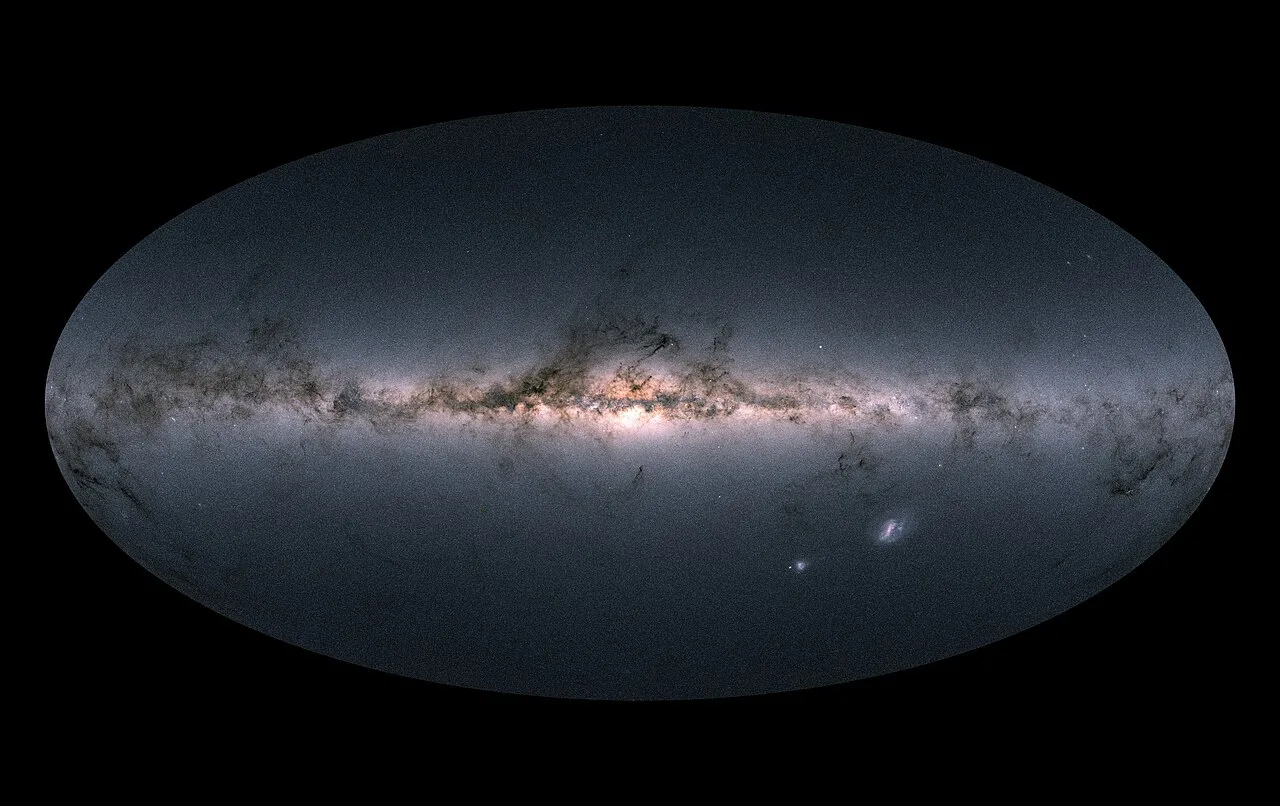
Our galaxy did not grow quietly. Using precise star measurements from the European Space Agency's Gaia mission, astronomers are piecing together how the Milky Way absorbed smaller galaxies over nearly 12 billion years, leaving behind 'ghost' groups of stars that still move together.
In 2018, astronomer Amina Helmi and her team used Gaia data to identify Gaia-Enceladus, a smaller galaxy that the Milky Way swallowed roughly 10 billion years ago. A 2026 study of 39 globular clusters, each holding about a million stars, found that 12 were not native to the Milky Way and were absorbed about 1.8 billion years before the Gaia-Enceladus merger.
An August 2026 paper confirmed that a galaxy known as Low-energy Kraken-Heracles collided with the Milky Way around 12 billion years ago. Its remains now sit in the galaxy's central bulge, where thick stardust makes them hard to study. Whether the giant cluster Omega Centauri is the core of another swallowed dwarf galaxy is still unresolved.
Astronomers expect sharper answers from upcoming instruments such as the 4MOST spectroscopic survey and the MOONS spectrograph, which will measure the chemistry and motion of millions more stars.
Source: The Hindu. Photo: ESA/Gaia/DPAC / Wikimedia Commons (CC BY-SA 3.0 IGO).